
In this post I want to tell an anecdote that shows how climate change effects can lead to a declining business value for a small farming operation. It made me believe that it’s time for a different approach in agricultural production.
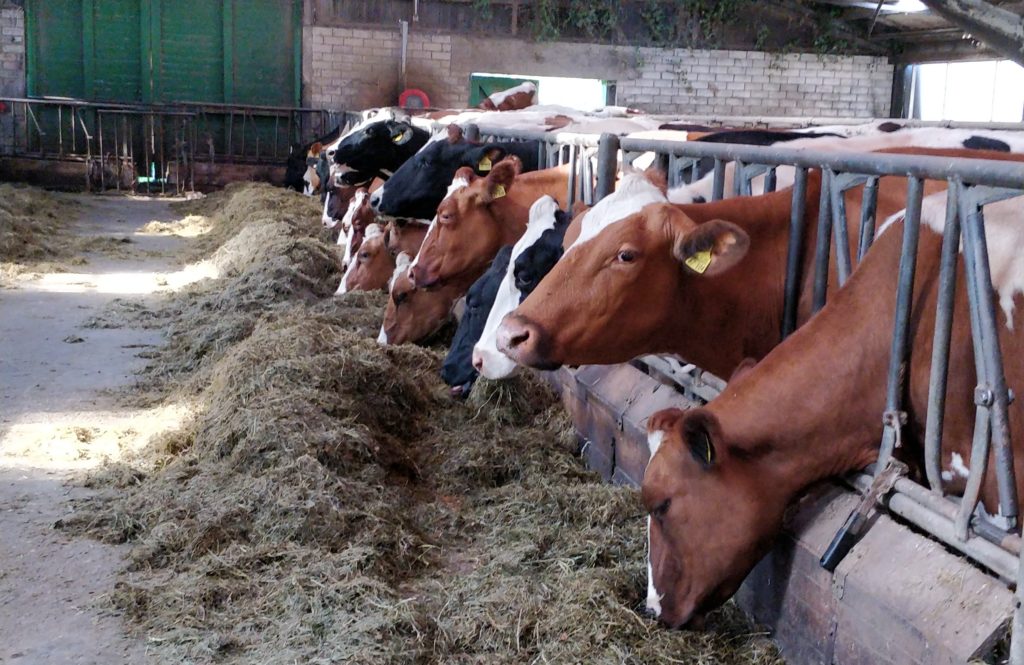
Last summer, my family visited an organic farm in the beautiful Eifel region, close to Cologne, Germany. The farming family produces organic milk with about 100 cows and also rents two apartments to tourists. We stayed there for a weekend while our kids really enjoyed the time in the hay slides and in between the animals.
In a long chat about the changing (business) climate for farmers and especially the challenges for their successors or new farming entrepreneurs I learned that the effects of climate change already puts pressure on their profitability.
The family owns 40 hectare of green weeds land that primarily serves as a food source for their cows. They either put the animals on that land for grazing or cut the weed and store it as hay for the winter season. This has been a typical form of cow farming for centuries in that region. Usually, the family would sell a surplus in hay to other farmers and still would have enough for their own animals.
The region usually is blessed with plenty of rain so that you’d find green landscapes over the whole year (unless it is snowing). But that has changed. The capacity for the land to produce green weeds has dramatically shrunk over the last few years. Coming from a situation where they always had more than enough, they now have to buy additional fodder from external vendors. They even were forced to sell some of their livestock to keep their business profitable.
The reason for this seems to be a fundamental change in weather patterns over the last few years. Usually, during spring, when weeds start to grow after the winter, a lot of rain meets powerful sunlight.
But during three of the last five years farmers from all over Germany were facing droughts. Rain shortages and higher temperatures during spring and summer dry out the land more frequently so that plants cannot grow without external watering. In this specific case for the family in the Eifel external watering is not always possible as the hilly landscape is not allowing for that.
I learned from this farmer’s anecdote that:
- Climate change effects lead to declining produce per hectare (in this case green fodder for cows)
- Landscapes are under extreme stress even in regions with enough water
- Small scale farmers profitability is in danger
We’re facing fundamental changes in weather patterns and it seems like the world desperately needs an alternative and new ways of agricultural production. New farming processes must consider the land’s capability for storing water and foster the recreation of natural resources.